10 reasons why you must visit the Alhambra in Granada
If you’re visiting Andalusia and Granada, a must-see on your trip is the Alhambra and Generalife Monumental Complex in Granada. The Alhambra is the second most visited monument in the whole of Spain and one of the main international tourist attractions. Indeed, the magic and uniqueness of the Alhambra transcend borders, as it is the only surviving palatine city from the Arab period in the whole world.
1. To discover the fascinating history of the Alhambra in Granada
If there’s one thing that amazes us about the Alhambra in Granada, it’s its incredible and incredibly rich history. This dates back to the 13th century, when the construction of the outer walls and the aqueduct was completed, although the entire complex took several centuries to build. However, the site has been occupied since Roman times.
The magic of the Alhambra lies in the fact that it has been shaped by the diverse cultures that have helped forge Granada’s identity. Within its walls, a wide variety of events have taken place, ranging from betrayals and murders – such as that of the Abencerrajes – to weddings, love affairs and infidelities, as well as meetings between various Nasrid and Christian kings.
Thus, both the Muslims and Christians who have lived there, as well as the stories that have unfolded within its walls, have gradually given it that distinctive character which makes it a monument unlike any other in the world. Many of these stories have inspired the works of various artists and travellers, both during the Romantic era and thereafter. Notable figures include Washington Irving, Manuel de Falla, François René de Chateaubriand and Loreena McKennitt…
2. To admire the architecture of the Alhambra and the Generalife
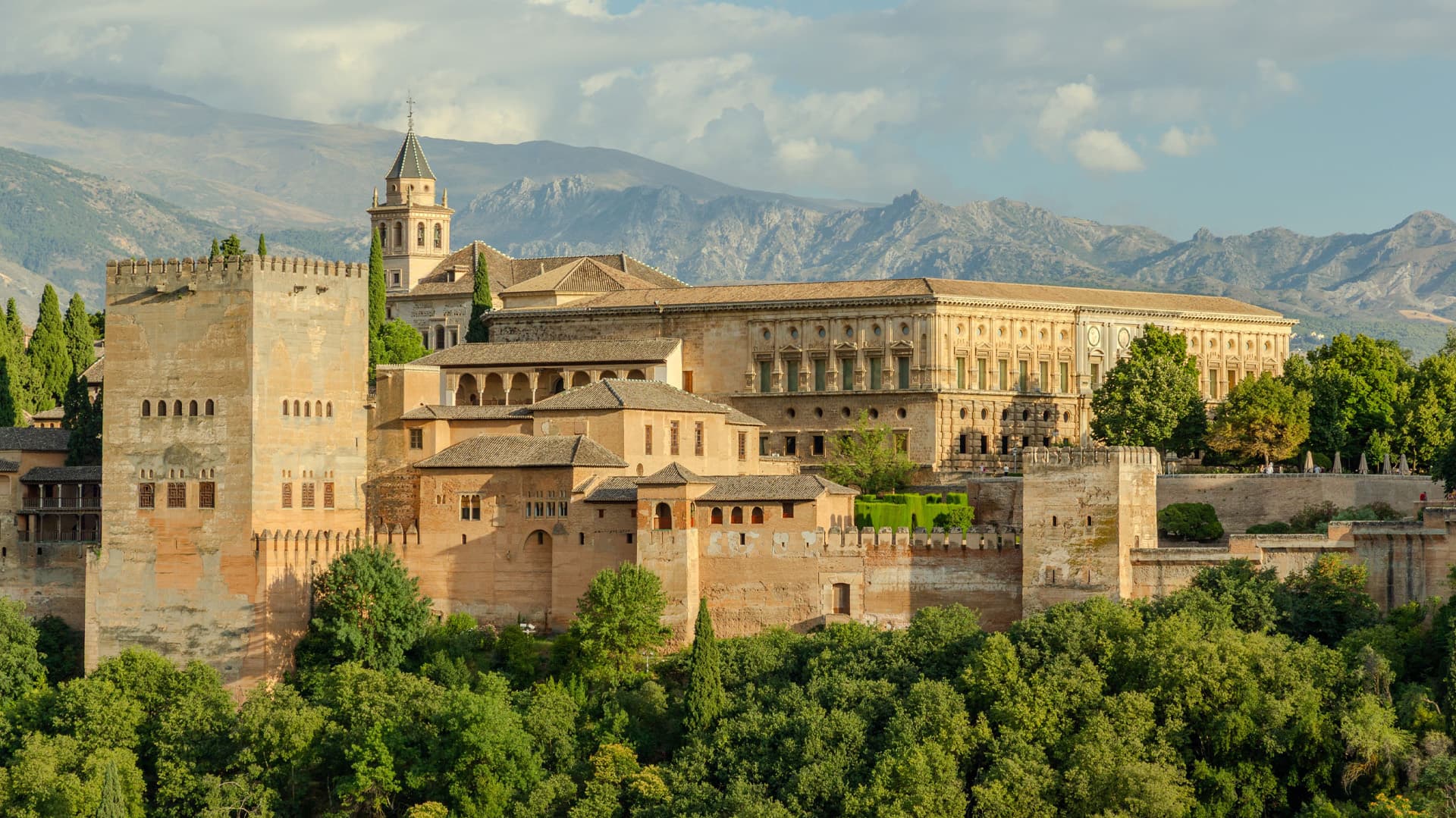
The Alhambra is an architectural complex of unrivalled beauty. Its style, whilst featuring elements typical of Al-Andalus and Nasrid architecture, also includes distinctive features such as the capitals of its columns adorned with Arabic calligraphy and recesses resembling caves, so characteristic of Muslim culture. It also features a Renaissance-style palace added by Charles V, following the expulsion of the Moors.
The result is a collection of stunning palaces and courtyards that captivate the hearts of visitors. The architects of the Alhambra took great care in decorating every space and nook, so you’ll be able to admire the numerous details and motifs in each of its rooms.
One of the most impressive decorative features of the Alhambra is the muqarnas vault. Muqarnas vaults are made up of overlapping cells or honeycomb-like structures that create a striking effect. During your tour of the Alhambra in Granada, we recommend that you pay particular attention to those in the Sala de las Dos Hermanas and the Sala de los Abencerrajes.
3. For the majestic palaces of the Alhambra and the Nasrid Palaces
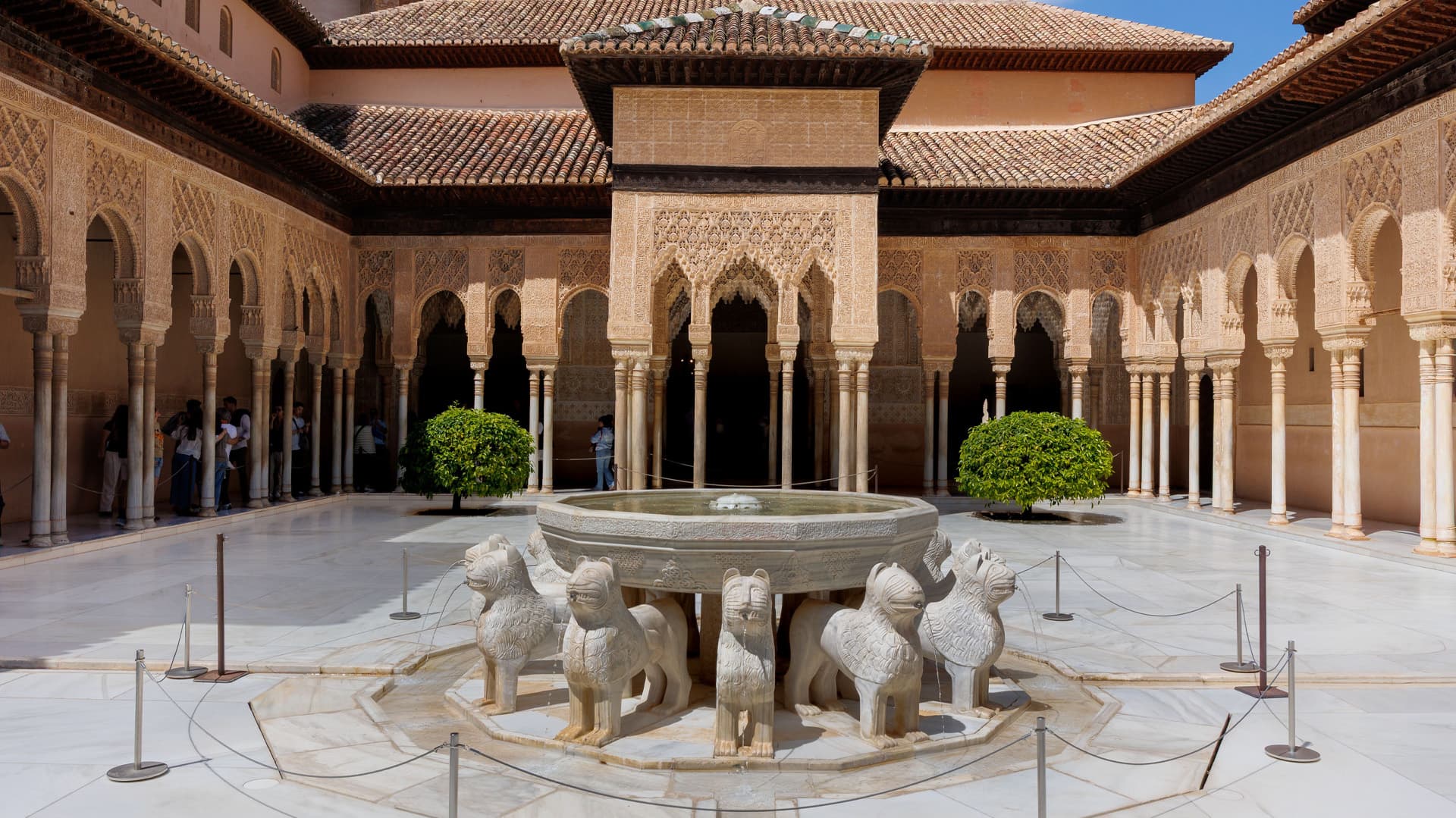
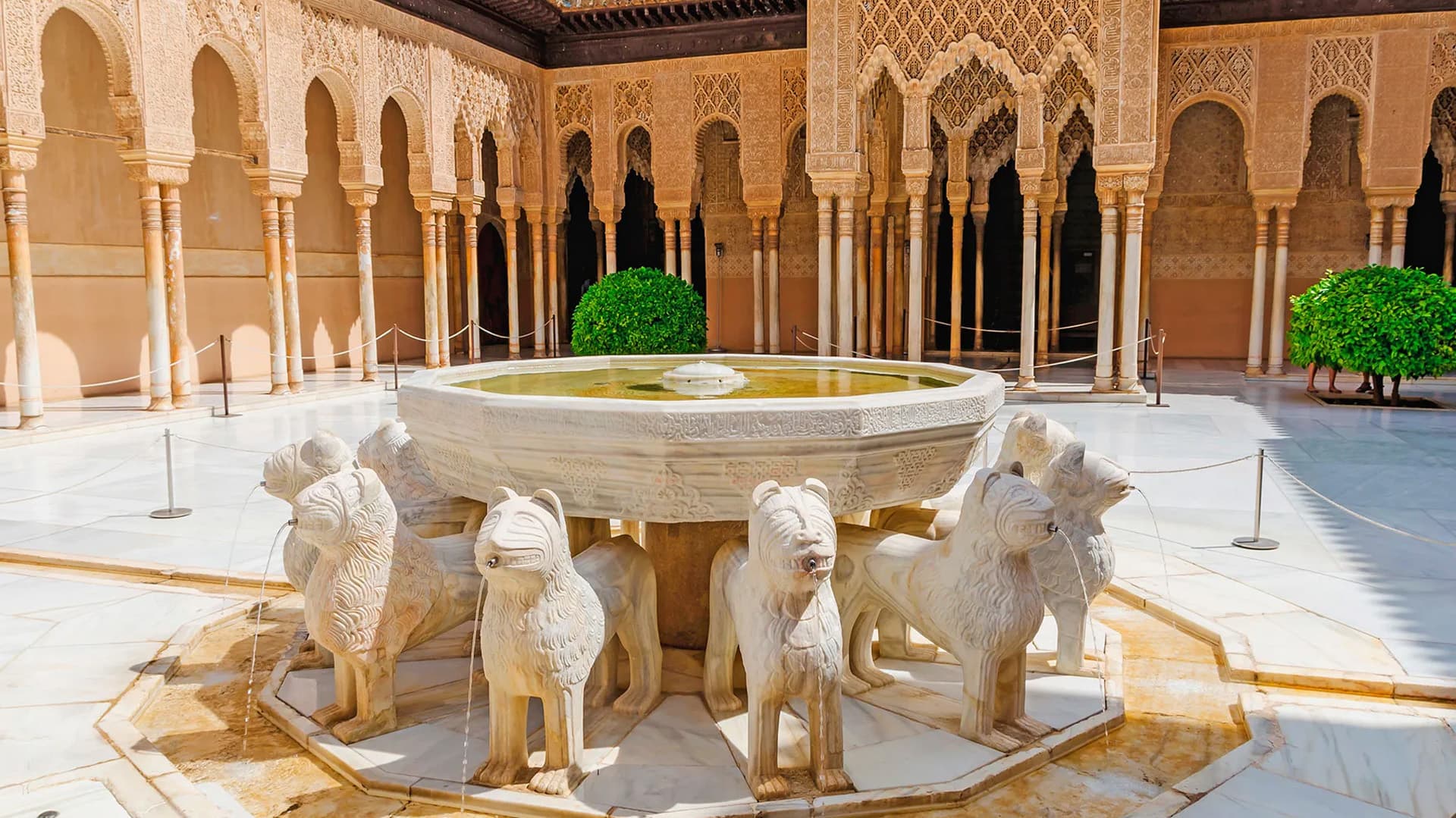
Few palaces are more beautiful than those gathered within the walls of the Alhambra. The palatine city comprises a total of four palaces. On the one hand, there are the Nasrid Palaces: the Mexuar (or Meshwar), the Comares Palace and the Palace of the Lions, all dating from the Arab period and built in the Arab style. And on the other hand, we find the Palace of Charles V – added by order of the emperor and built in the Renaissance style – whose construction was not completed until the mid-20th century.
During your visit to the Alhambra, don’t miss the tour of the Comares Palace, one of the monument’s greatest treasures. The Patio de Arrayanes, which surrounds the palace complex, stands out for its pond – flanked by two rows of hedges – which is one of the Alhambra’s most iconic sights.
4. Because of the countless legends surrounding the Alhambra
Its many centuries of history and its exotic, majestic appearance have made the Alhambra in Granada the ideal setting for all manner of legends and folk tales, which have been passed down by word of mouth amongst the people of Granada and visitors to the city.
If you take a guided tour of the Alhambra in Granada, our guides will tell you its most famous legends, and you’ll be able to immerse yourself in its historic settings. One place shrouded in legend is the Comares Tower, the tallest of the Alhambra’s palaces. Legend has it that it was there that Christopher Columbus convinced the Catholic Monarchs to fund his expedition to the West Indies, which led to the discovery of the Americas.
5. To discover the poems of the Alhambra
The vast majority of visitors to the Alhambra do not realise that its walls are covered with beautiful poems, hidden beneath calligraphic decorations. These poems were written by three poets from the Court of Granada: Ibn al-Yayyab, Ibn al-Jatib and Ibn Zamrak, the most notable of them all.
On the door of the magnificent Comares Palace, lost amongst its intricate decoration featuring a thousand motifs, we can read:
‘I am a crown upon the lintel of my door:’
The East makes me envy the West.
Al-Gani billah, command me to hurry
Take a step towards victory as soon as you’re called upon.
I’m always waiting to see the face
the king’s, dawn breaking over the horizon.
May God make your works so beautiful
‘What a presence and figure she has!’
6. To marvel at the magnificent views of Granada from the Alhambra
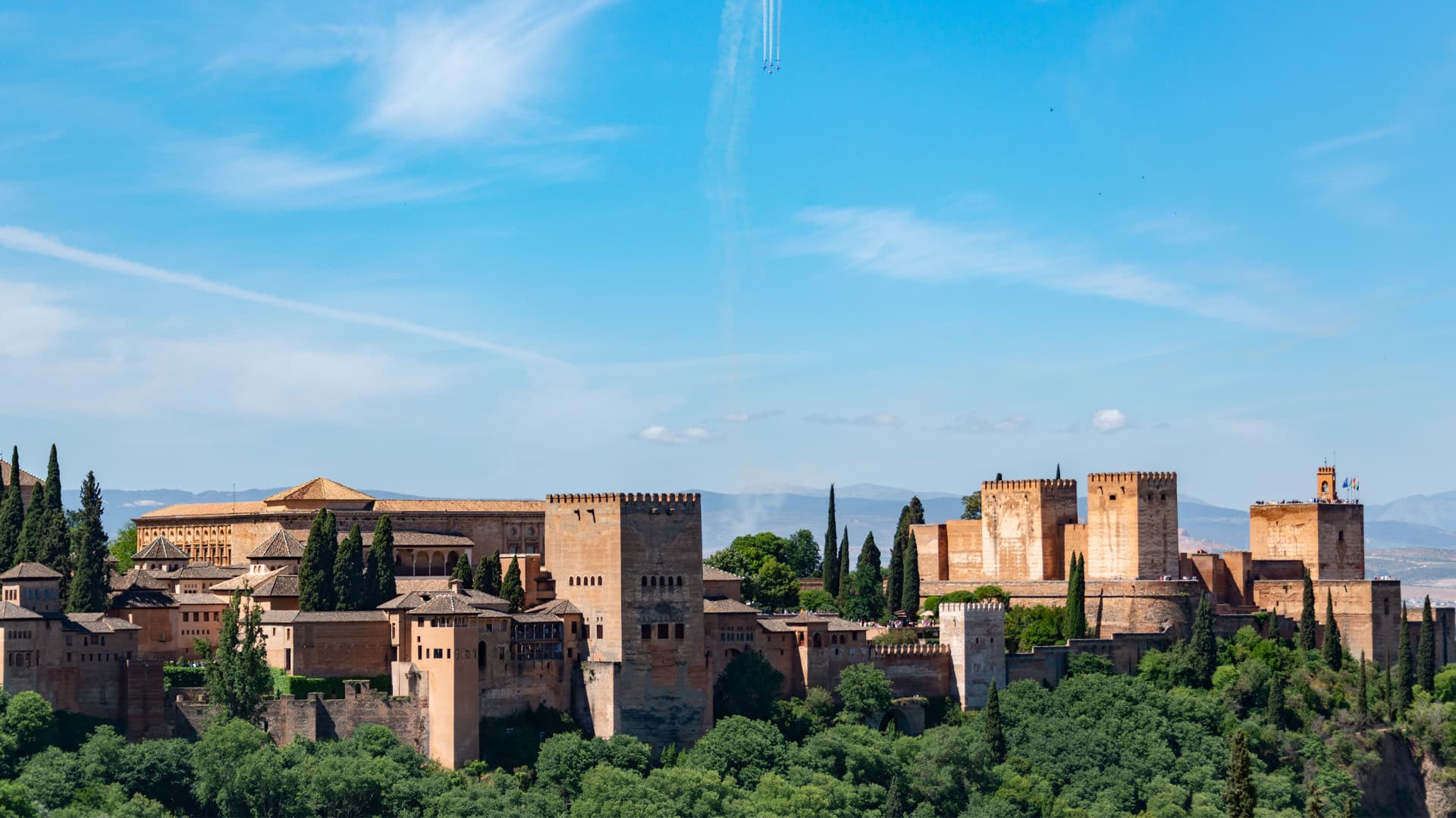
Situated atop the hill of al-Sabika, the Alhambra’s viewing points and towers offer truly breathtaking views of the city of Granada. The fact is that the complex of Nasrid Palaces was designed not merely to be a luxurious royal residence, but also to serve as a military fortress, enabling its rulers to dominate the entire city.
So, don’t forget to bring a good camera with you on your visit. From the Alhambra, you’ll enjoy spectacular views of the city of Granada and its famous Albaicín neighbourhood, as well as the Sacromonte Caves, situated on the slopes of the Cerro de San Miguel. You’ll also be able to see the snow-capped peaks rising above the Sierra Nevada.
7. For the gardens and courtyards of the Alhambra and its palaces
The gardens and courtyards of the Alhambra are one of the main reasons why you should visit it on your next trip to Granada. The Alhambra Monumental Complex boasts the most beautiful gardens and courtyards in Al-Andalus, and they are in an enviable state of preservation.
Gardens are a very important part of Arab palatial architecture, as they served to recreate the longing for the Islamic Paradise. Muslims imagine paradise as a beautiful garden full of delights and pleasures, light and water, and it is this vision that is brought to life in the gardens and courtyards of the Alhambra.
In the words of Professor Chueca Goitia, “the more you contemplate the Alhambra, the more you get the feeling that the Arabs’ ideal was to live above a garden”.
8. Because the Alhambra in Granada is a World Heritage Site
The importance and influence of the Alhambra and the Generalife in Granada have been recognised throughout history. That is why, in 1984, the Alhambra and Generalife Monumental Complex was designated a UNESCO World Heritage Site.
Before receiving this designation, the Alcázar of the Alhambra, along with its gardens and outbuildings, was declared a “National, Historical and Artistic Monument” by the Kingdom of Spain in 1870. This status was extended in the 20th century, with the gardens of the Alhambra and the Generalife being designated “Historic Gardens”. These designations enabled their restoration and conservation, bringing them to their current magnificent condition.
9. To discover why the Alhambra has been and continues to be a source of inspiration
The beauty and exotic charm of the Alhambra have been, and continue to be, a source of inspiration for numerous artists, painters and poets. That is why the Alhambra has had such a wide-ranging influence on both Spanish and foreign culture.
In the world of music, we can highlight the work *Noches en los jardines de España* by the composer Manuel de Falla. More recent influences include Francisco Tárrega’s guitar piece *Recuerdos de la Alhambra*, the album *Poemas de la Alhambra* by musicians Eduardo Paniagua and Serghini, and the concert *Nights from the Alhambra* by singer Loreena McKennitt.
As for literature, we’d like to highlight the American Romantic writer Washington Irving and his work *Tales of the Alhambra*. Washington Irving was a fervent advocate of the Alhambra and one of the pioneers behind its restoration in the 19th century, a time when the Alhambra had been left to its own devices by the authorities.
10. To experience the essence of Al-Andalus from the Alhambra Palace
In short, visiting the Alhambra in Granada means gaining a deep understanding of the essence of the most magical and splendid Al-Andalus. A very important period in Hispanic culture, during which, thanks to the blend of the three cultures that coexisted in Al-Andalus – Arabs, Jews and Christians – Spain reached a unique cultural and artistic peak.